Glen Island Harbour Club Wedding Photographer: A Complete Planning Guide
A Working Guide to Light, Portrait Locations, and Wedding Day Flow by Richard Krutick
Krutick Photography | krutickphotography.com | richard@krutickphotography.com | Contact Me
Glen Island Harbour Club is one of the most architecturally layered waterfront wedding venues in Westchester County, and the photographic decisions you make in the first four hours of your wedding day will determine whether the Long Island Sound backdrop reads as a defining element of your images or as pleasant scenery in the distance.
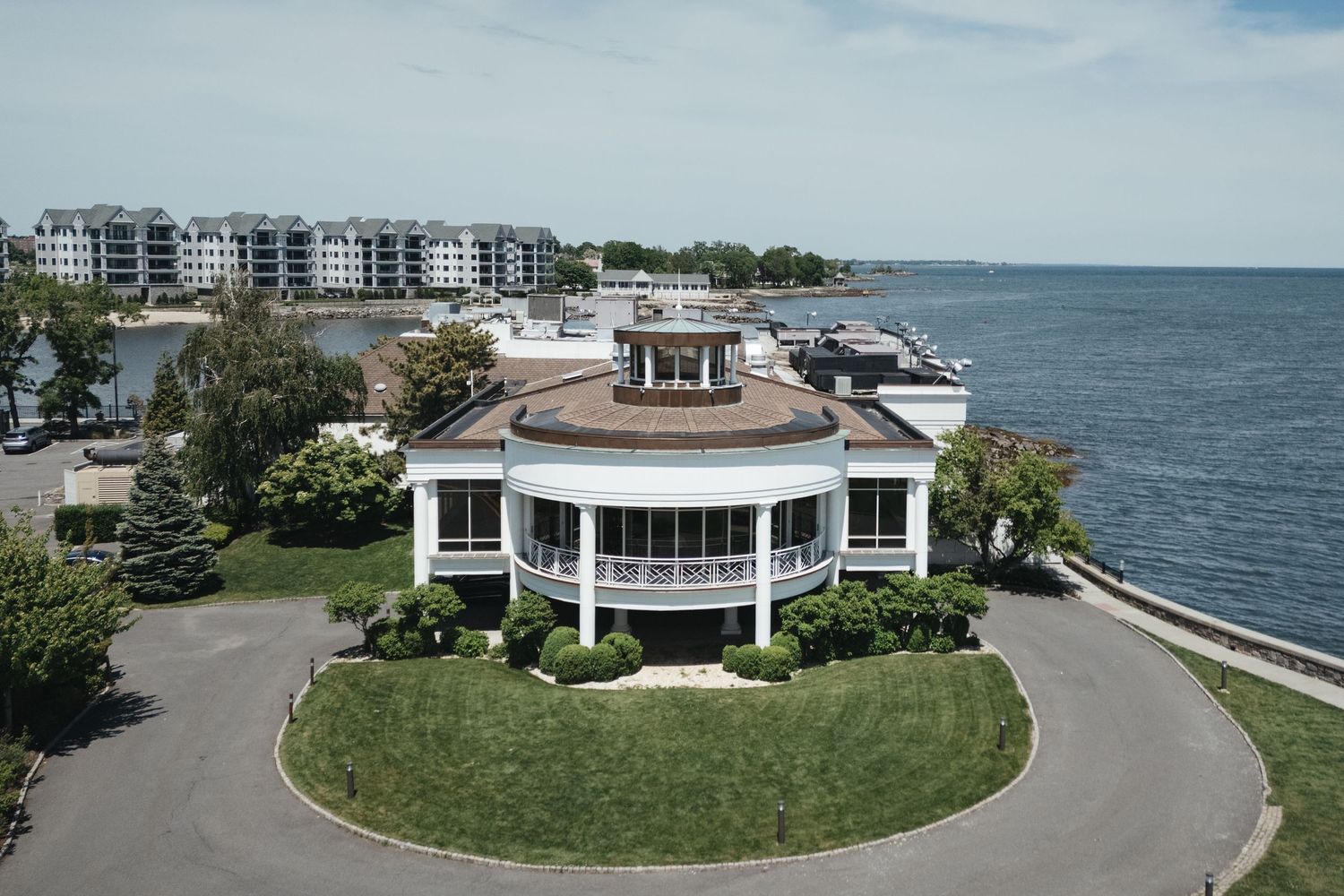
I work as a wedding photographer across Westchester, the Hudson Valley, and southern Connecticut, and the venues I find most rewarding to cover share one quality: they reward a specific plan rather than a general approach. Glen Island is that kind of venue. Situated on a small island in New Rochelle, accessed by a causeway off Weyman Avenue, it sits on a peninsula of land surrounded by the Sound on three sides. The orientation of the main building, the exposed waterfront terraces, and the chapel's relationship to the water all behave differently at different times of day, and a photographer who arrives without understanding those relationships will spend the afternoon chasing light rather than working with it.
The detail most couples don't discover until they've been here in person: the causeway approach frames the venue's roofline against open water and sky, and that view, in the 30 minutes before sunset, is one of the strongest architectural frames available at any Westchester waterfront venue.
This guide exists because couples who have chosen Glen Island Harbour Club deserve a photographer's read on the property, not a venue brochure restated with different adjectives. What follows is how the light actually behaves here, how a well-planned wedding day flows, where the strongest portrait locations are, and what the timing decisions look like across every season.
👉 Your wedding photos are one of the few things that become more valuable with time. Read why investing in the right wedding photographer is one of the best decisions you’ll make for your wedding day.
Quick Facts: Glen Island Harbour Club
- Venue name: Glen Island Harbour Club
- Address: 50 Weyman Avenue (Glen Island Park), New Rochelle, NY 10805
- Style: Waterfront ballroom and resort-style club
- Setting: Secluded island on Long Island Sound, Westchester County, with three-sided water exposure and causeway arrival
- Capacity: Third-party listings report up to approximately 600 seated and up to 1,000 cocktail-style; confirm directly with the venue
- Best portrait locations: Western waterfront terrace (golden hour), formal marble staircase (afternoon), causeway approach (pre-sunset framing), chapel gardens (open shade, all day)
- Best light window: 30 to 60 minutes before sunset on the western terrace face; varies by season from 4:15 p.m. in winter to 7:45 p.m. in summer
- Rain plan: Full indoor ceremony and cocktail spaces available; overcast light is an asset for portraits
- Ideal season: Spring through autumn for outdoor terrace ceremonies; winter produces sharp, graphic light with earlier sunset windows
- Photographer note: The island's three-sided water exposure means the strongest portrait light rotates across the property over the course of the day. A location plan built around that rotation is the difference between one repeating background and four distinct environments.
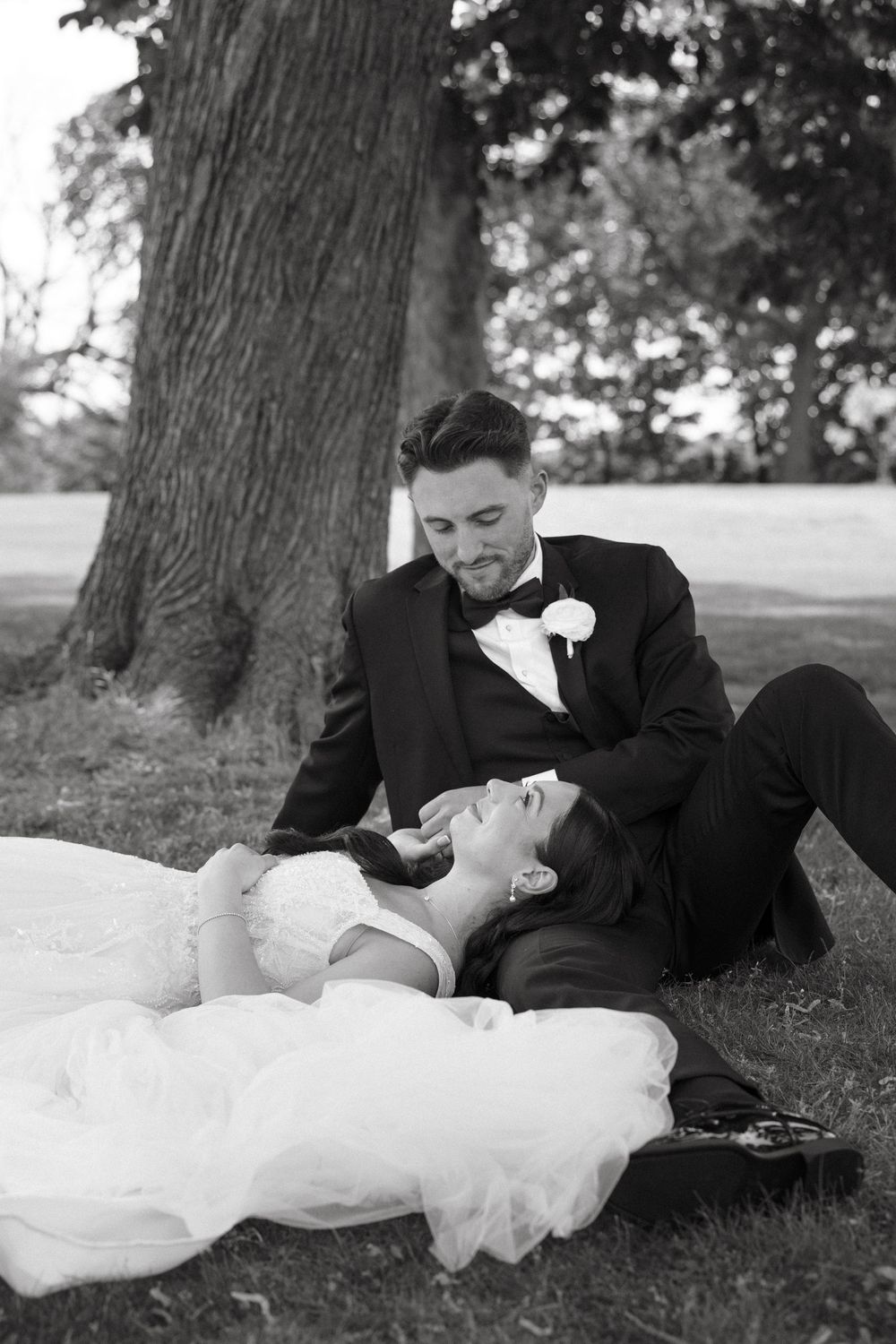
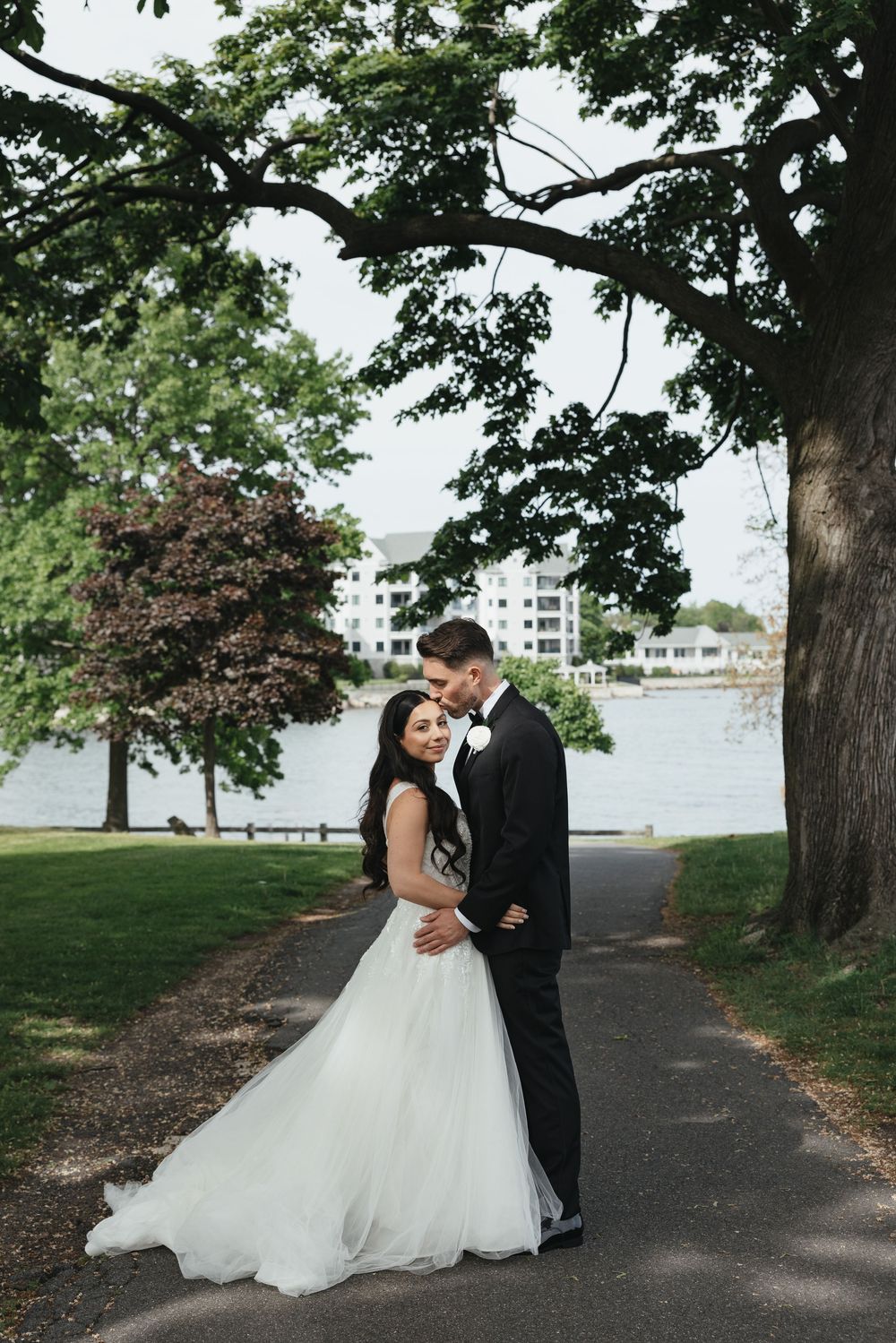
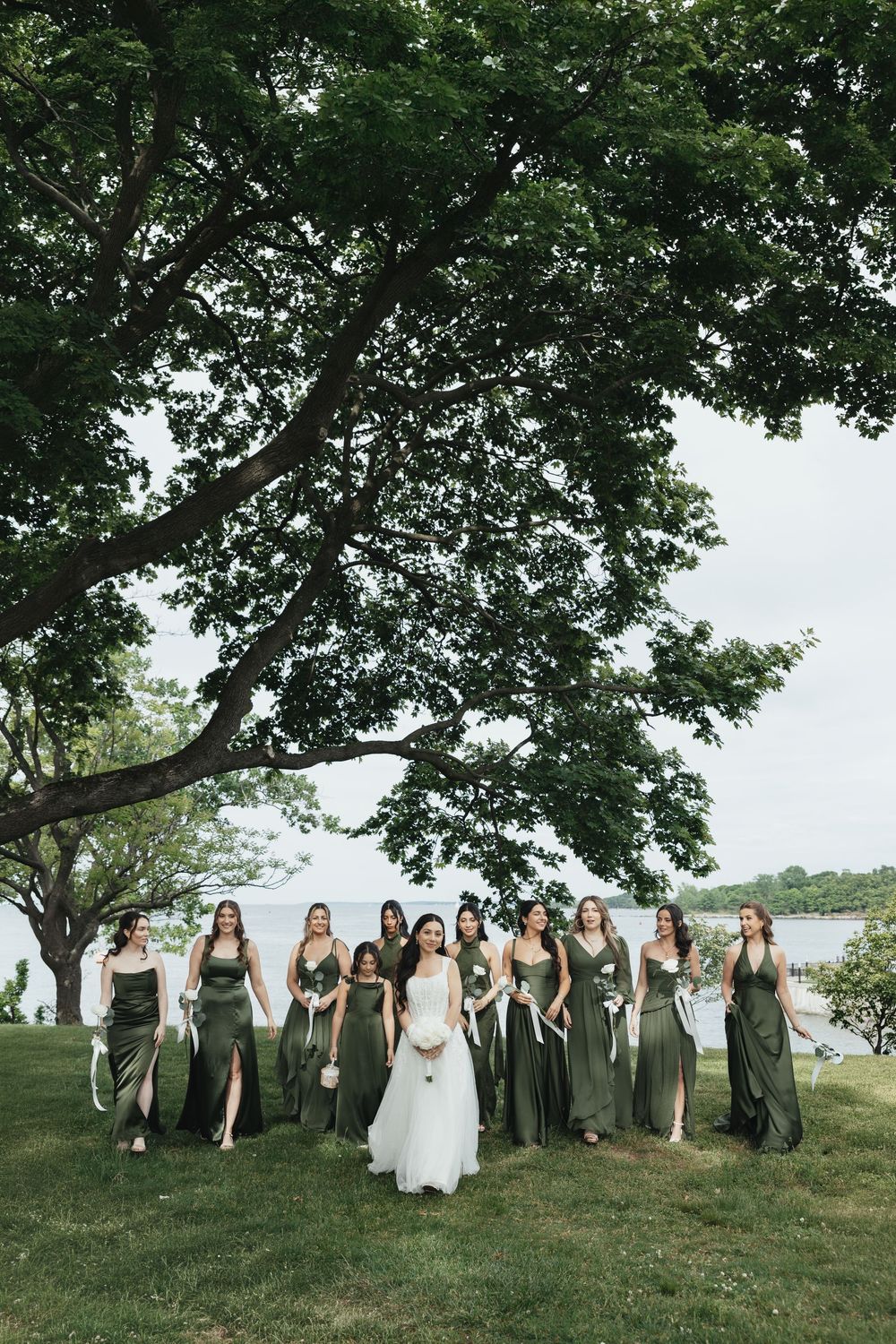
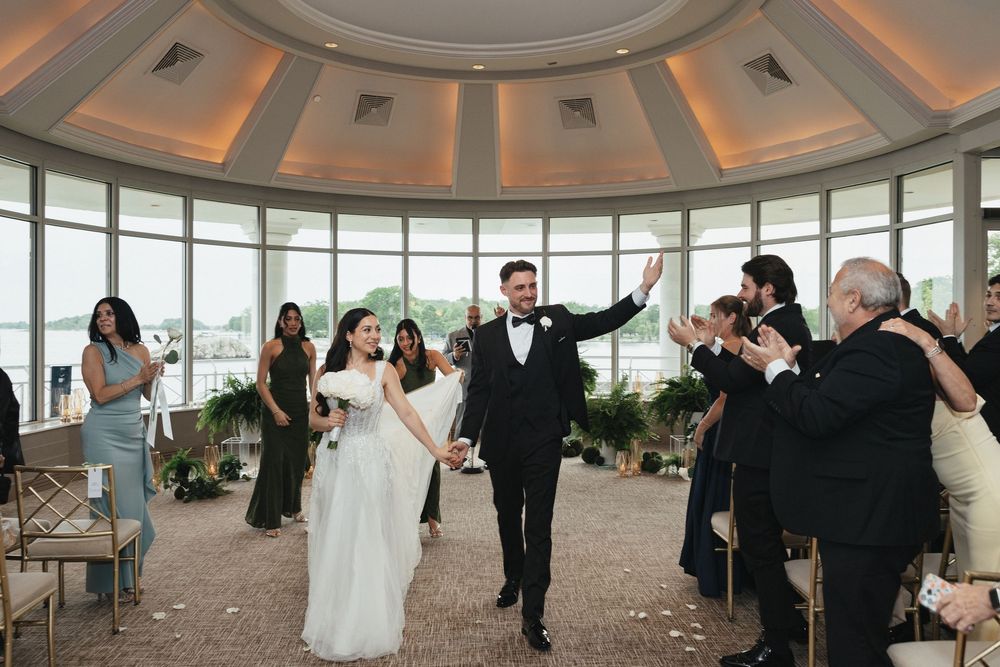
Marisa & Tony: Proof That Glen Island's Dance Floor Has No Off Switch
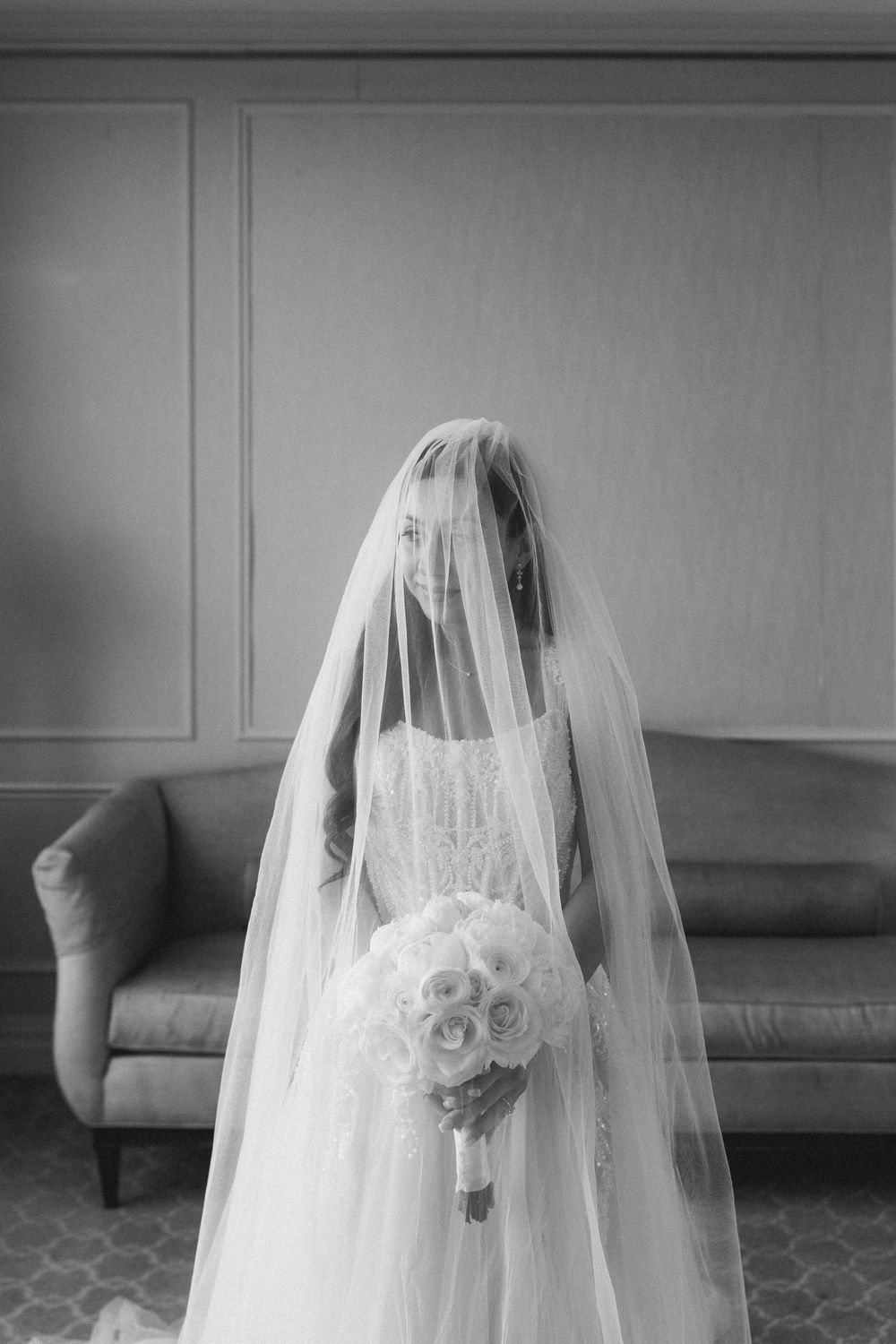
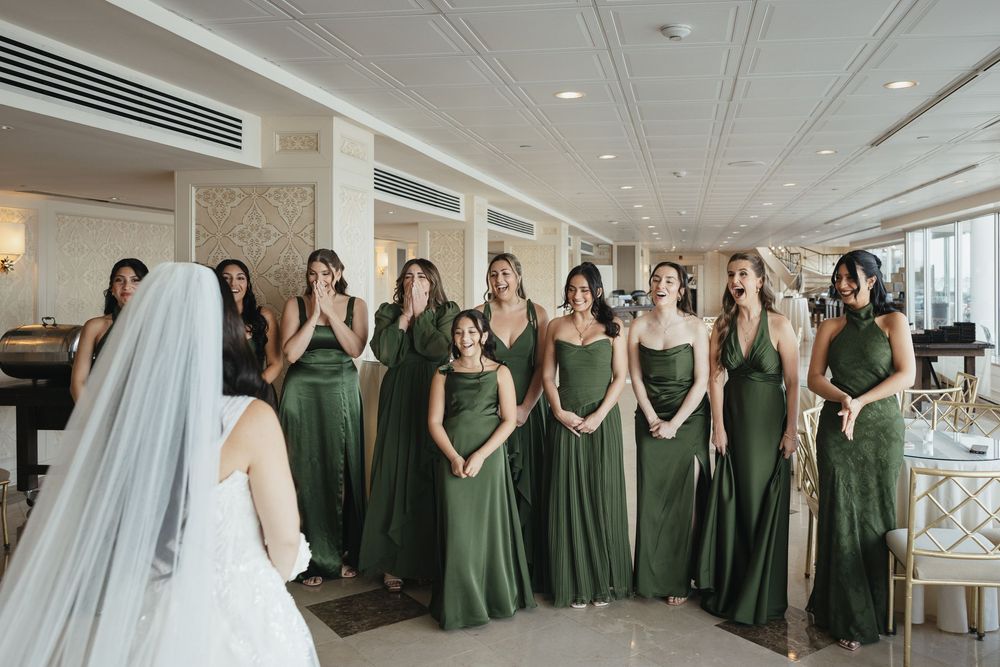
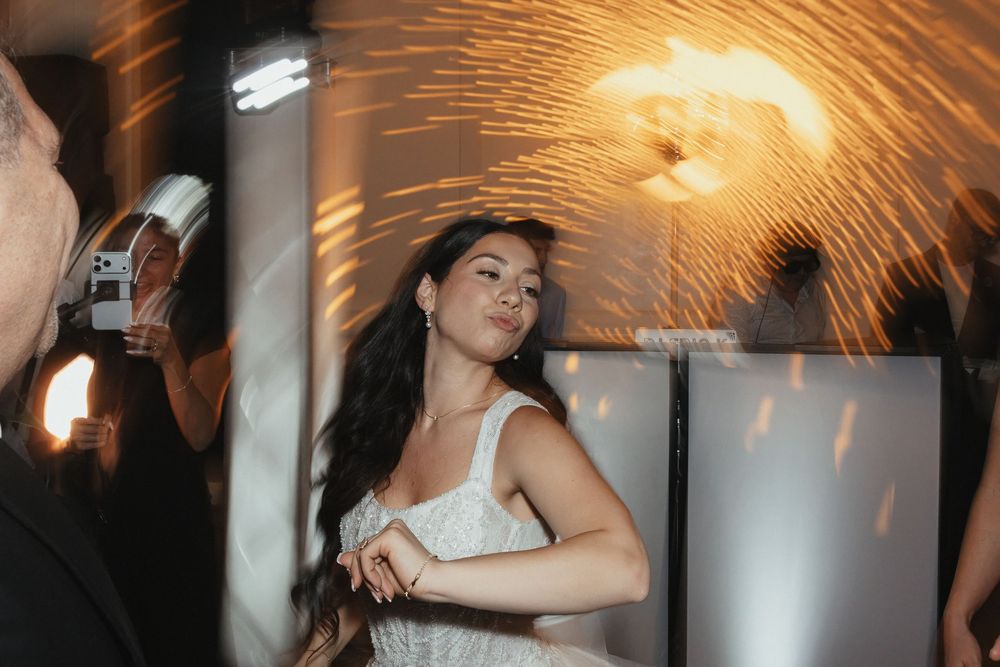
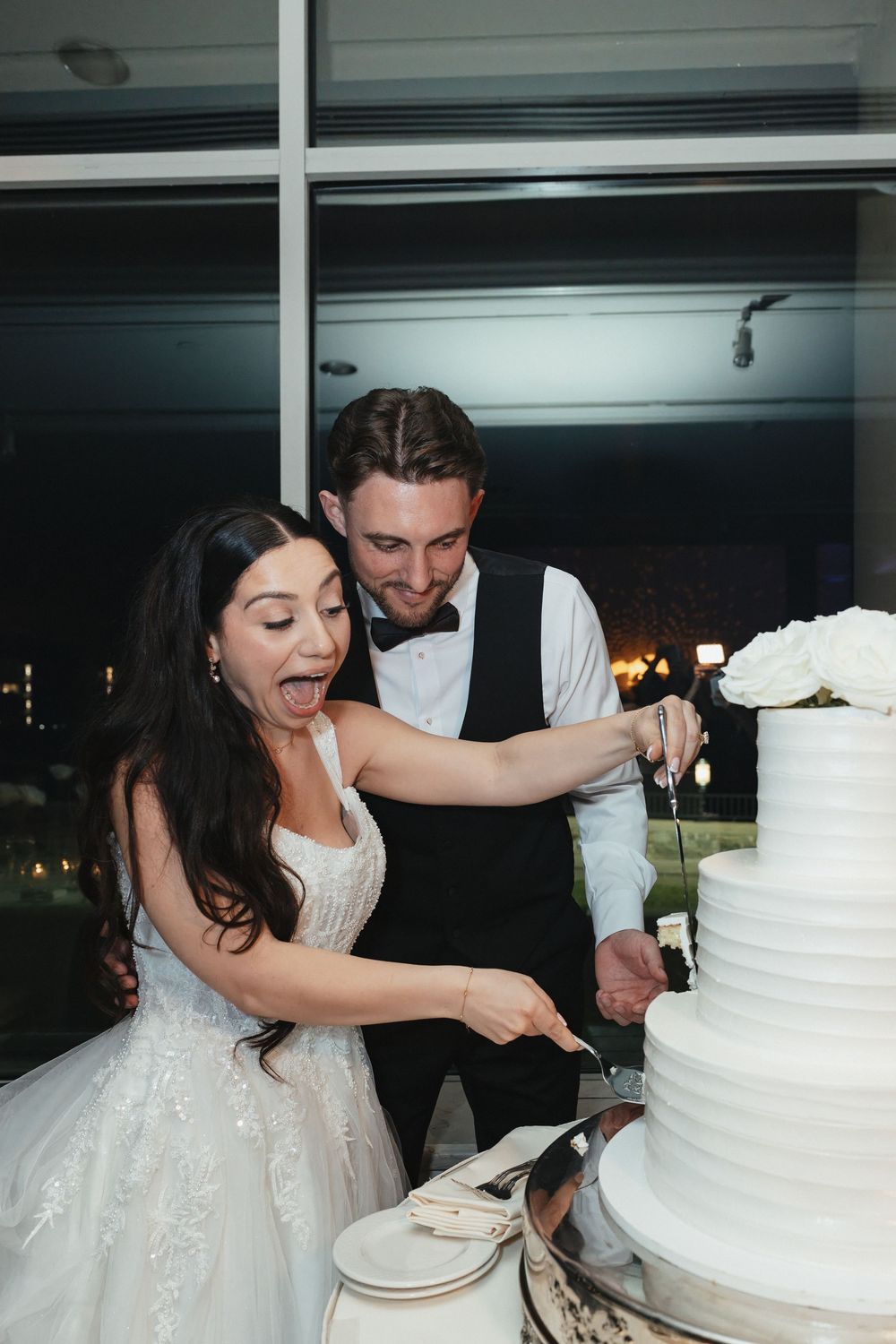
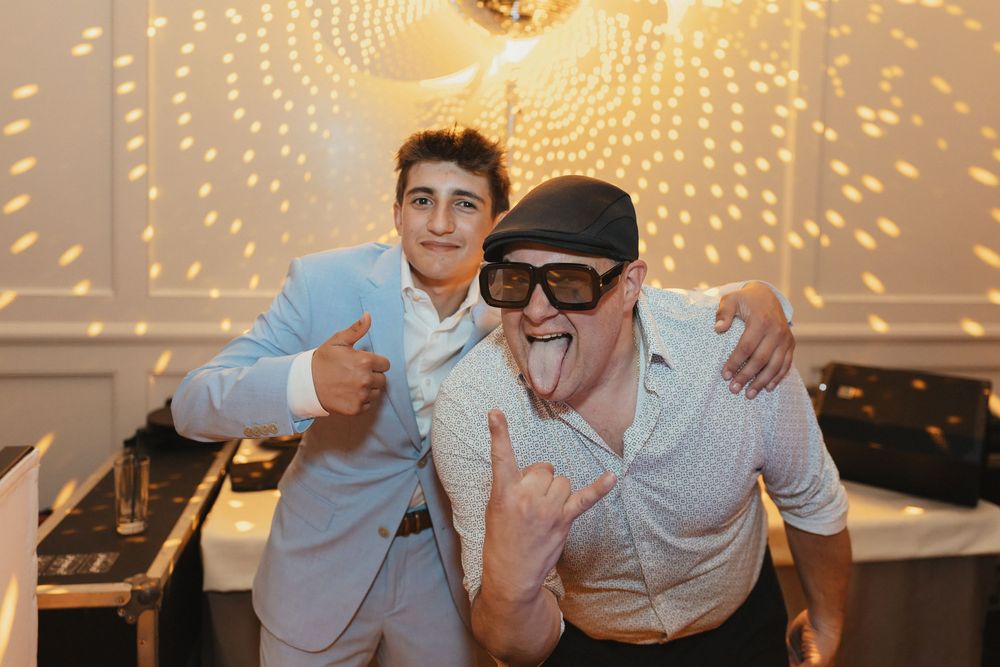
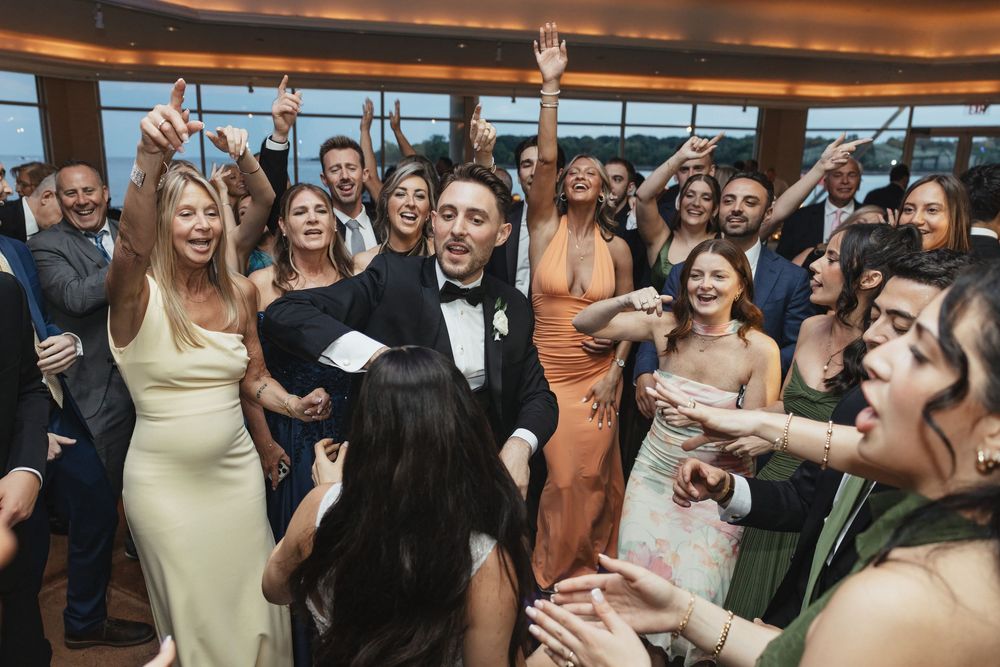
Spring at Glen Island Harbour Club brought everything a wedding day should have: warm light on the water, a crowd that showed up ready to celebrate, and a dance floor that never once lost momentum. Marisa and Tony's guests filled that ballroom with the kind of energy that photographers live for — genuine, uninstructed, and impossible to manufacture. It was one of the most alive rooms I have ever worked in.
What Makes Glen Island Harbour Club Different to Photograph
Glen Island Harbour Club stands apart photographically because of its island setting surrounded by Long Island Sound on three sides, a non-denominational chapel with direct water views, and multiple distinct spaces including ballrooms, cocktail terraces, a formal marble staircase, and a causeway approach that each produce different light conditions across the wedding day.
Glen Island is not a single-room venue dressed with different linens for different couples. It is a compound of interconnected spaces, each with its own light characteristics and photographic logic. Understanding the difference between how the waterfront terrace reads at noon versus 6 p.m., or how the chapel interior behaves on an overcast October morning versus a clear June afternoon, is the difference between a predictable gallery and an exceptional one.
The Island Setting Creates Three Distinct Light Environments
Most waterfront venues sit on one edge of a body of water. Glen Island is surrounded by the Sound on three sides, which means the direction of available water light changes across the day. In the morning, the eastern water face catches direct early light; by afternoon, the southern exposure takes over; and by late afternoon and early evening, the western causeway and grounds face the setting sun directly. A couple who plans their portrait windows around this rotation has access to genuinely different backgrounds within a 200-meter radius of the building, from reflected water light on one side to warm directional sun on the opposite face, without leaving the property.
This three-sided exposure is the single largest photographic advantage Glen Island holds over comparable Westchester venues, including those along the same New Rochelle waterfront strip. VIP Country Club and Greentree Country Club both offer Long Island Sound settings, but neither provides the same degree of wraparound water exposure that Glen Island's island position creates.
The Chapel Interior and Consistent Diffused Light
The non-denominational chapel at Glen Island Harbour Club, publicly described on the venue's own site as having waterfront views, is one of the more consistently useful ceremony spaces in Westchester for interior photography. Based on the building's described orientation and the waterfront-facing chapel windows visible in venue photography, the interior receives soft, diffused light for a substantial portion of the ceremony day rather than direct overhead sun. That consistency reduces the exposure management challenge of balancing the couple against bright window light, which is a common issue in chapels built primarily for aesthetics. Confirm the specific ceremony window positions and their relationship to afternoon sun with your Glen Island coordinator; the details are worth a site visit before the wedding day.
The Marble Staircase and Building Exterior as Structural Portrait Elements
Third-party venue listings and guest reviews consistently reference Glen Island's marble staircase and grand building entrance as signature visual features of the property. Architecturally, a formal staircase functions as a structural portrait element rather than simply a transition space: the vertical lines combined with water visible at the base of the frame create a layered composition that reads clearly even with a large formal group. In the 45 minutes before golden hour, when the sun drops low enough to cast angled light across the building's facade without creating harsh shadows, the staircase exterior becomes one of the strongest single portrait locations on the property. The light quality at this moment is directional without being punishing, and the architectural detail in the building's exterior gives the frame visual weight that a flat lawn or garden portrait cannot replicate.
The Waterfront Terrace and How Reflected Water Light Works Here
Most photographers are cautious about midday light at outdoor venues because direct overhead sun creates unflattering downward shadows. Glen Island's waterfront terraces benefit from a specific mitigating factor: the water surface surrounding the island reflects ambient fill light back toward the building, which softens the shadow gradient considerably during the 11 a.m. to 2 p.m. window. The effect is most noticeable on the terrace faces that look directly over the Sound. This does not eliminate midday challenges, but it meaningfully reduces the time window when the terrace is genuinely difficult. Plan formal group portraits for before 11 a.m. or after 3 p.m., and use the midday window for candid cocktail-hour coverage where the reflected fill becomes an asset.
👉 If you're exploring venues across the region, you can start with my full Hudson Valley wedding venue guide to compare locations, styles, and what to expect.
"Glen Island is the only venue in Westchester where the water is not a backdrop. It is the setting, on all sides, from arrival to last dance."
How a Wedding Day at Glen Island Harbour Club Actually Flows
A Glen Island Harbour Club wedding day flows from on-site or off-site getting ready, through a pre-ceremony first look and portrait sequence on the grounds or terrace, into the chapel or outdoor ceremony, then a waterfront cocktail hour, and finally the main ballroom reception. The photographic priority is completing all formal coverage before the ceremony using the four-window portrait system.
Glen Island operates as a full-service venue, which means the day's structure is largely set by the venue's own sequencing: arrival, ceremony, cocktail hour, reception. What a photographer controls is how the portrait coverage is distributed within that structure, and at Glen Island the most important decision is made before the first look: whether to use the grounds on the western, Sound-facing side of the building for the pre-ceremony session, or to keep the first look interior and move outside for the couple's portraits.
👉 Every great wedding day starts with one document. Read the stress-free wedding timeline guide.
Getting Ready: On-Site Suites and the Off-Site Buffer
Glen Island Harbour Club offers on-site bridal suites, which removes the transportation variable that affects timing at venues without dedicated getting-ready spaces. When couples use the on-site suites, getting-ready coverage can begin closer to the venue arrival time. That said, the on-site suites are interior rooms, and their light quality depends entirely on window placement and time of day. Reserve the final 30 minutes before the first look for detail shots and portraits near natural window light rather than overhead ambient light, regardless of which suite is used.
If you are preparing at a hotel or rented property off-site, build a 25-minute travel buffer into your timeline between the end of getting ready and your scheduled arrival at Glen Island. New Rochelle traffic near I-95 on Fridays and Saturdays is a real variable, and the causeway access means there is no secondary route.
First Look and Pre-Ceremony Portrait Windows
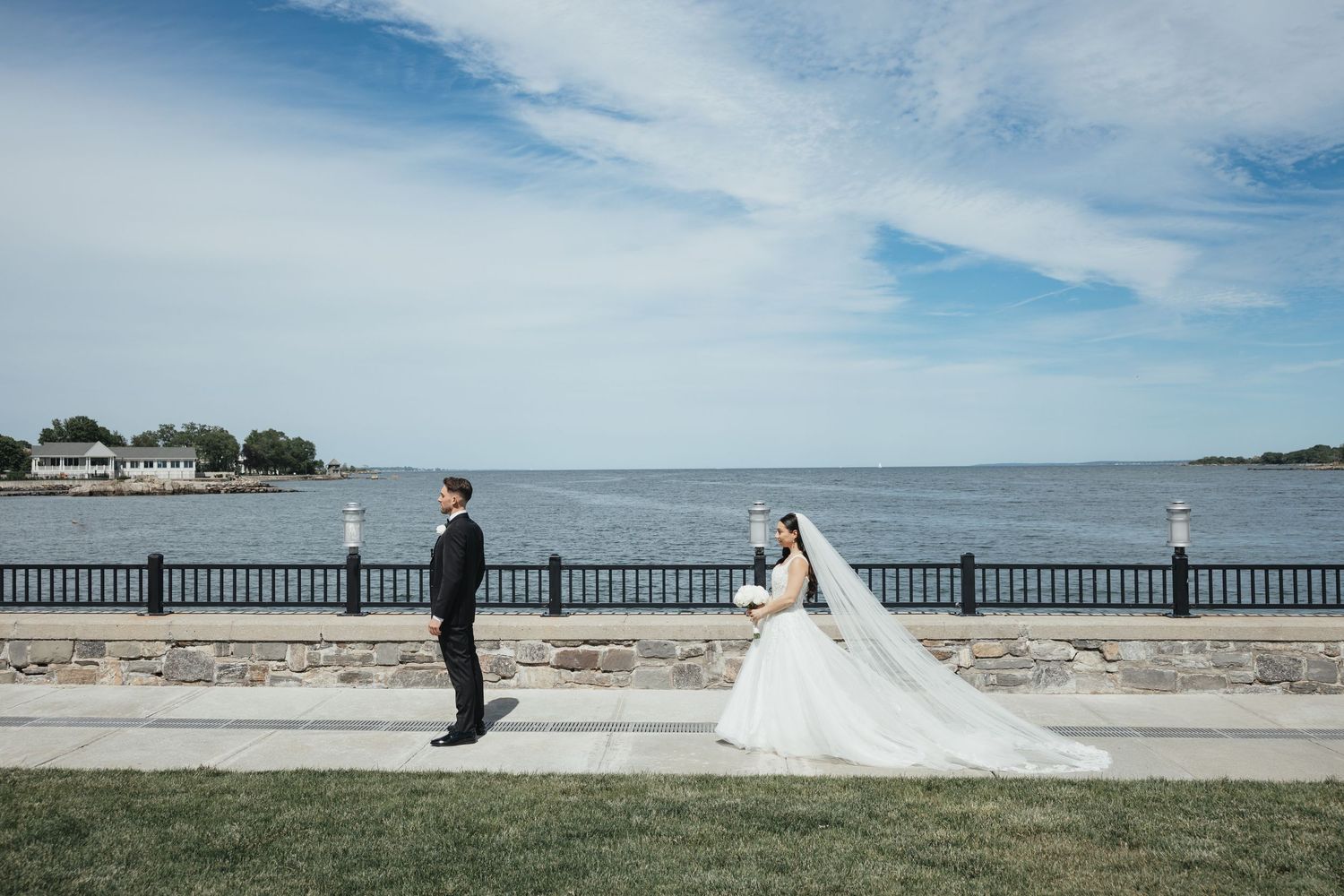
The western waterfront terrace or the causeway-facing grounds are the primary first look locations at Glen Island, depending on the time of day. Before 3 p.m., these areas receive soft, indirect light because the sun is still relatively high and the building provides partial shade. After 3 p.m. in spring and summer, the terrace begins to receive low angled light from the southwest: directional and flattering. A 4 p.m. first look in June or July at Glen Island places the couple in some of the most workable natural light the property produces in the pre-ceremony window.
The formal staircase is the second option for couples who prefer an architectural frame over an open-water one. It works across a wide range of times because the building itself controls the light falling on the staircase, and framing the couple against the facade rather than open sky makes exposure management straightforward.
👉 One decision shapes the entire day. Read the complete first look guide.
Ceremony: Chapel Interior and Outdoor Options
For the chapel processional, the most important technical consideration is the direction the couple faces relative to the primary window light source. Confirming the approved ceremony positions with the Glen Island coordinator at least 30 days before the wedding is a standard part of my planning process: the details matter at a venue where the chapel's waterfront windows are a genuine visual element.
For outdoor ceremonies on the waterfront, the light at a 5 p.m. ceremony in July is close to ideal: the sun is low, the water provides ambient fill, and the background naturally includes the Sound. At a 3 p.m. outdoor ceremony in August, the sun is high and overhead, which requires orienting the couple correctly relative to the sky. Both are workable; the 5 p.m. window simply requires less correction.
👉 One policy protects every ceremony photograph you will ever have. Read the phone-free wedding ceremony guide.
Cocktail Hour: Terrace Coverage and the Golden Hour Pullout
Glen Island's cocktail hour typically runs on the waterfront terrace, and it is the venue's strongest natural space for documentary coverage. The combination of water views, guest movement, and available ambient light makes this the most photogenic 90 minutes of the day for candid work. It is also where the golden hour portrait pullout happens: a 10 to 15 minute window during which I take the couple to the strongest available directional light, typically the western-facing terrace or grounds, before returning them to their guests.
Reception: Ballroom Light and Moment Sequencing
The Glen Island ballrooms are large, high-capacity spaces with ambient event lighting. The photographic priority during the reception is sequencing key moments: first dance, parent dances, toasts, and cake cutting in the first 75 to 90 minutes of the reception when the room's ambient light is at its most varied and interesting. After the dancing begins in earnest and the room transitions to full dance-floor mode, the photography shifts to candid documentary coverage. I work with the couple and coordinator at the planning stage to map this sequencing before the wedding day.
Where to Take Portraits at Glen Island Harbour Club
The five strongest portrait locations at Glen Island Harbour Club are the western waterfront terrace for golden hour (30 to 60 minutes before sunset), the formal marble staircase exterior for structural afternoon portraits (3 p.m. onward), the causeway approach for architectural water framing (final 45 minutes of light), the chapel gardens for open-shade portraits (reliable all day), and the eastern shoreline path for directional water light (morning through early afternoon).
The property at Glen Island Harbour Club has more usable portrait territory than most couples realize before arriving. Because the building sits on a true island, the shoreline path along the water's edge gives access to open-water backgrounds at multiple compass points, and the light at each point changes over the course of the day. Understanding this rotation is what makes the difference between a portrait set that uses one background in slightly different framings and a portrait set that reads as though it was taken across several distinct environments.
The western waterfront terrace is the primary golden hour location, facing the direction of sunset across the Sound. In late spring and summer, when sunset falls between 8:10 and 8:28 p.m., this terrace receives direct warm light from approximately 7:15 p.m. onward. In autumn, the earlier sunset shifts this window to approximately 5:30 to 6 p.m. Either way, the 15 to 20 minutes of directional light on this terrace produce the most visually distinctive frames available at the venue: warm, low-angle light with open water and sky behind the couple.
The formal marble staircase and building exterior provide the most structurally interesting portrait location at nearly any time of day. From approximately 3 p.m. onward in spring and summer, the sun's angle creates defined shadow lines on the building's facade that give the frame visual depth. The staircase itself provides a vertical compositional element that works well for both two-person and group portraits, with the water visible in the background at the base of the frame keeping the setting connected to the waterfront identity.
The chapel exterior and surrounding gardens function as an open-shade location. Because the garden side of the chapel remains in consistent diffused light for most of the day, this area serves as the reliable option for portraits between 11 a.m. and 3 p.m. when the terrace faces are in direct overhead sun. The soft, even quality of the light here works well for close portraits and ring detail photographs.
The causeway approach is an underused location. Walking the couple from the main building toward the causeway access point creates a framing unique to Glen Island: the building's roofline against open water and sky, with the manicured grounds in the foreground. This works best in the 45 minutes before golden hour, when the sky behind the building begins to show color. It requires no more than 8 to 10 minutes of portrait time to produce three or four strong frames.
The eastern shoreline path catches direct morning light and soft cross-light in the early afternoon. For couples doing a morning ceremony or a first look before noon, the eastern face of the property is the strongest option: the light is directional, the water is in the background, and the scale of the Sound provides natural depth. After 2 p.m. in summer, this face falls into partial shadow as the building blocks the afternoon sun, at which point portrait work should shift to the western side.
👉 Before you book anyone, read the complete wedding photography guide. Everything you need to know, in one place
"Glen Island has a way of making a wedding feel genuinely removed from ordinary life. You arrive by causeway, surrounded by water on three sides, and somewhere between the mainland and the island, the day becomes its own world."
Timeline and Lighting Strategy at Glen Island Harbour Club
The recommended structure for a Glen Island Harbour Club wedding uses the four-window portrait system to complete all formal coverage before the ceremony, preserve the cocktail hour for the couple and guests, and lock in a 10 to 15 minute golden hour pullout at the strongest directional light of the day. The exact timing of each window shifts by season and ceremony start time.
Every timing recommendation here comes from the same principle: the best light at Glen Island Harbour Club is specific and time-limited. A couple who understands where that light falls and when can structure their day to access it rather than discover it too late.
The Four-Window Portrait System at Glen Island
The four-window system organizes all formal coverage into a consecutive sequence before the ceremony. Each window has a defined purpose and a defined duration.
Window 1: First Look, 15 minutes. A private moment for the couple before the wedding party and family arrive. At Glen Island, this happens on the western terrace or staircase exterior, depending on the time of day.
👉 Should you do a first look?: Yes. Without a first look, the morning portrait windows are inaccessible and the golden hour pullout becomes the only creative session of the day. Read the complete first look guide and make the call.
Window 2: Couples Portraits, 30 to 45 minutes. The primary creative session. The goal at Glen Island is to move through two or three distinct light environments using the island's wraparound water access: causeway approach, shoreline path, and terrace face. 30 minutes produces a complete set; 45 minutes allows a third location.
Window 3: Family and Wedding Party Portraits, 30 to 45 minutes. Organized group coverage before the ceremony. The staircase exterior is the primary location for large group frames because the architectural structure gives the composition a focal point. Organizing family groupings in advance with a list provided to a coordinator keeps this window at 30 minutes.
👉 Family photos don’t have to feel chaotic. Read my guide on how to organize family photos efficiently so you can spend less time standing around and more time actually enjoying your wedding day.
Window 4: Golden Hour, 10 to 15 minutes. A brief pullout during cocktail hour to the strongest directional light of the day. At Glen Island in summer, this means leaving the cocktail terrace no later than 15 minutes before sunset and moving to the western waterfront face. In autumn and winter, the pullout window shifts earlier in the evening. Accounting for this seasonal shift at the planning stage is the difference between a golden hour session that runs on schedule and one that burns time searching for the right position.
This approach means the couple walks into the ceremony relaxed, their formal coverage is complete, and cocktail hour is fully theirs.
Seasonal Golden Hour Timing at Glen Island
Sunset at Glen Island Harbour Club arrives at different clock times across the year, and each season requires its own pullout plan.
In June and July, sunset falls between 8:10 and 8:28 p.m., making a 7:45 p.m. pullout during a dinner reception realistic. In October, sunset falls between 6:05 and 6:30 p.m., shifting the pullout to the natural midpoint of cocktail hour. In December and January, sunset before 4:30 p.m. means the golden hour window must be built directly into the post-ceremony sequence, not treated as a bonus. Planning these windows at the consultation stage rather than on the wedding day is what allows them to actually happen.
👉 If you’re planning your timeline around a venue like this, this guide will help you structure the day so it feels relaxed and not rushed: Tips for a stress-free timeline
Glen Island Harbour Club vs Other Westchester Wedding Venues
Glen Island Harbour Club is the largest-capacity waterfront venue on the New Rochelle island strip, best suited
to larger weddings that want a formal island setting, a dedicated chapel, and a full-service ballroom format. Couples with smaller guest counts or who prioritize a historic mansion aesthetic are well served by Davenport Mansion; couples drawn to beach-casual waterfront should consider The Surf Club on the Sound.
The New Rochelle waterfront is a concentrated corridor of Long Island Sound venues, and most couples booking Glen Island have also toured one or more of the following properties. These comparisons are specific: the goal is to help you identify which venue fits your actual priorities.
Glen Island Harbour Club vs Davenport Mansion on the Sound
Davenport Mansion at 400 Davenport Avenue in New Rochelle is a 19th-century historic waterfront mansion with one-event-per-day positioning, serving weddings of approximately 100 to 225 guests. Public package information reports a pricing band of roughly $125 to $200 per guest depending on date and count.
Davenport's photographic advantage is the historic architecture: the mansion's facade, interior staircases, and period detail give every frame a distinct visual texture that a purpose-built event venue cannot replicate. Glen Island's photographic advantage is scale and light access: the island position, the wraparound water exposure, and the marble staircase all produce images at a different physical scale than Davenport's more contained setting.
Choose Davenport if your guest count is under 225 and the historic mansion character matters more to you than island access and ballroom scale. Choose Glen Island if your guest count is larger and you want a setting where that scale feels designed rather than managed.
Glen Island Harbour Club vs The Surf Club on the Sound
The Surf Club on the Sound in New Rochelle is a beachfront venue with ballrooms, terraces, and lawns directly on Long Island Sound. It occupies the same geographic corridor and competes for similar audiences.
The photographic difference is atmosphere. Surf Club's beach access and lawn-to-water transition produce a more relaxed visual register: portraits from the sand and grass read as beach-wedding adjacent. Glen Island's formal entrance, marble staircase, and causeway approach read as structured waterfront elegance.
Couples whose portrait vision includes sand underfoot and a casual-coastal aesthetic belong at Surf Club. Couples who want waterfront access with clear architectural frames and a formal arrival sequence belong at Glen Island.
Glen Island Harbour Club vs VIP Country Club and Greentree Country Club
VIP Country Club and Greentree Country Club in New Rochelle both sit on the same waterfront strip and serve large-format weddings with all-inclusive catering and terrace ceremony options. VIP markets capacity up to approximately 500 guests; Greentree uses positioning language nearly identical to Glen Island's own.
The photographic distinction comes down to the island setting. VIP and Greentree are mainland waterfront venues: their terraces look out over the Sound, but the arrival is by ordinary road, without a causeway approach. Glen Island's physical separation from the mainland, the three-sided water exposure, and the causeway framing are simply not available at either country club property.
For couples who need large-format waterfront coverage and the country club format, both are legitimate options. For couples who want the island identity visible from arrival to last dance, Glen Island is the only New Rochelle venue that delivers it.
How to Decide Between Glen Island and Its Competitors
Choose Glen Island Harbour Club if: your guest count is large, the formal waterfront island setting and causeway arrival are central to your vision, and a dedicated chapel with grand ballroom format matches your wedding's scale.
Choose Davenport Mansion if: your guest count is under 225 and historic mansion character is more important than island access.
Choose Surf Club if: the beach aesthetic and informal waterfront feel are closer to your visual priorities.
Choose VIP or Greentree if: your primary needs are large guest count, all-inclusive format, and waterfront views, and the island distinction is not a deciding factor.
👉 If you’re considering the Glen Harbour Club, you may also want to compare it to other high-end Hudson Valley and Westchester wedding venues to see how it stacks up: Hudson Valley Venue Guide
Choosing the Right Season for a Glen Island Harbour Club Wedding
Every season is photographically viable at Glen Island Harbour Club. Spring and early summer offer the longest golden hour windows and most saturated water and sky colors. Late summer produces the warmest ambient light. Autumn delivers the sharpest directional light and most dramatic sky conditions. Winter requires a pre-4:30 p.m. golden hour pullout and produces clean, graphic images with high contrast over the Sound.
Spring (March through May)
March mornings on the Sound are often overcast, which produces flat, soft ambient light that works well for chapel interiors and covered terrace portraits. By April, the light quality on the water begins to warm and the sky above the Sound shows the variable cloud-and-blue conditions that create dynamic backgrounds without requiring perfect timing. May is the first month when golden hour falls late enough, approximately 7:45 to 8 p.m., to allow a cocktail-hour pullout without restructuring the reception timeline. Spring bookings require a rain contingency for outdoor ceremony and terrace portions; Glen Island's covered cocktail spaces are substantial enough to absorb the full guest count if the terrace is unavailable.
Spring light on the Sound has a quality that summer light does not: the lower sun angle in April and May means golden hour arrives with more warmth than June. If you are choosing between a late May and an early June date, May often gives the richer light window at this venue.
Summer (June through August)
The sun sets between 8:10 and 8:28 p.m. in June and July, which means a dinner reception beginning at 7 p.m. still has a viable golden hour pullout before 8:15 p.m. The water temperature stabilizes the air temperature on the island, keeping the terrace comfortable well into the evening even on hot days. August brings the warmest ambient light quality of the year: the sun's slightly lower arc compared to June produces more angled light from mid-afternoon onward, and the evening sky over the Sound on a clear August night turns a specific shade of deep blue during the reception that no artificial lighting replicates.
Midsummer bookings at Glen Island: at 8:20 p.m. in July, the golden hour pullout happens after the reception has begun. Confirm with your coordinator that the timeline allows for a 10-minute exit during dinner service.
Autumn (September through November)
September still has summer light quality with sunset falling between 7:15 and 7:30 p.m. By October, the earlier sunset (6:05 to 6:30 p.m.) shifts the golden hour pullout to the cocktail hour itself: the couple leaves at the midpoint, completes 10 to 15 minutes of portraits on the western terrace, and returns before the last guests move toward the ballroom. October light at Glen Island is specific: lower sun angle, stronger warm color, sharper shadow definition. The water takes on a deeper blue-gray quality that provides strong contrast against any autumn color along the causeway or grounds.
October at Glen Island has a golden hour window between approximately 5:45 and 6:10 p.m. If your ceremony ends at 5:30 p.m. and cocktail hour begins at 5:45 p.m., schedule the pullout for 5:50 p.m. and keep it to 12 minutes. Precise scheduling here is what separates a usable golden hour session from a rushed sprint.
Winter (December through February)
Winter bookings require rethinking the timeline more substantially than any other season. Sunset falls before 4:30 p.m. from late November through mid-January, which means the golden hour pullout must be built into the post-ceremony sequence, not treated as a cocktail hour bonus. A practical winter structure: first look at approximately 2 p.m., couples portraits through 3:15 p.m., family and wedding party portraits through 3:30 p.m., ceremony beginning at 3:30 p.m., ceremony complete by 4:15 p.m., and an immediate 10 to 15 minute pullout before sunset at 4:25 p.m. The winter light quality at Glen Island is, by many measures, the sharpest of the year: low sun angle, high contrast, clean sky above the Sound, no heat haze over the water. Winter portraits in this light have a graphic clarity that summer images rarely match.
Winter couples: the 4:15 to 4:25 p.m. window is your most valuable asset at Glen Island. Plan the ceremony to end before 4:15 p.m. and that window is yours.
👉 If you’re trying to decide how much coverage you actually need based on your season and timeline, this guide breaks it down clearly: How much wedding photography do you need?
Who Glen Island Harbour Club Is Right For
Glen Island Harbour Club is well suited to larger weddings, often 200 or more guests, where a formal waterfront island setting, dedicated chapel, and full-service grand ballroom format are central priorities. It is a particular fit for couples with strong Westchester or New York metropolitan ties for whom proximity to New York City without sacrificing a genuine waterfront island setting is a clear requirement.
Glen Island Harbour Club is built for scale. The ballrooms, the staffing model, the valet operation, and the physical infrastructure of the island property are designed around weddings where the guest count is substantial and every element of the day is managed by a single venue team. Couples who thrive in this setting tend to value polish and precision: the uniformed valet arrival across the causeway, the marble staircase entrance, the ballroom's visual weight, and the sense of arriving somewhere genuinely separate from the mainland. The photographic identity of this venue rewards couples whose portrait vision includes architectural frames, dramatic water backgrounds, and formal portrait sequences.
The planning considerations worth knowing before you book: Glen Island's island access via a single causeway means that timing logistics for vendor teams, shuttle services, and guest arrivals require coordination that a standard mainland venue does not. New Rochelle has solid hotel options within a 10-minute drive, and the venue's proximity to I-95 and the Hutchinson River Parkway makes it accessible from New York City and Connecticut. The physical scale of the ballroom spaces means that floral and decor investments need to be planned at the proportions those rooms require. These are planning realities, not obstacles: couples who address them at the booking stage arrive on their wedding day prepared, and the venue's professional staff handles the logistics with real consistency.
Glen Island has served as the host venue for Westchester Magazine's annual Best of Westchester signature event every year from 2022 through 2026, a detail that reflects the venue's standing in the county as much as any award category does.
Questions Couples Ask About Glen Island Harbour Club
The most common photography questions cover first look timing, optimal ceremony start time for waterfront portraits, the rain plan, coordinator communication, ballroom reception light, and the four-window timeline structure. The most common venue logistics questions cover capacity, catering policy, LGBTQ+ affirmation, and parking and hotel access.
Do you recommend a first look at Glen Island Harbour Club?
Yes, clearly. The four-window portrait system depends on a first look because it allows all formal coverage to be completed before the ceremony. At Glen Island specifically, a first look allows you to use pre-ceremony natural light on the western terrace or causeway approach, which is often more workable than what is available during the cocktail hour golden hour pullout. Couples who decline the first look compress their portrait time into 20 to 30 minutes between the ceremony and cocktail hour, which at a venue this size is functionally insufficient for the full portrait set the property makes possible.
What is the best ceremony start time for outdoor portraits?
A ceremony start time of 4:30 to 5:30 p.m. in spring and summer places the couple in the best natural light for a same-day golden hour pullout on the western terrace. If you are using the chapel for the ceremony, the interior light is consistent enough that the start time is a coordination choice rather than a light quality choice. The pre-ceremony couples portrait window is more time-sensitive than the ceremony itself.
What is the rain plan for an outdoor ceremony at Glen Island?
Glen Island has covered indoor ceremony and cocktail spaces that accommodate the full guest count when the terrace is unavailable. Photographically, an overcast or lightly rainy day is not a setback: diffused light eliminates the harsh overhead shadow problem entirely and produces some of the most even, flattering portrait light available. The covered cocktail areas and interior spaces maintain consistent ambient light throughout the reception. The rain plan at Glen Island is a logistics adjustment only; photographically, it is an alternative approach, not a downgrade.
How do you coordinate with the Glen Island coordinator on timeline?
My standard process includes a coordination call at least 30 days before the wedding to confirm portrait window timing, ceremony positioning access, the cocktail hour pullout schedule, and the sequence of reception moments. I provide a written photography timeline in advance so the coordinator can integrate it into the broader vendor schedule. Glen Island's coordinators are experienced professionals; this call is efficient and specific.
What should I know about the ballroom for reception photos?
The Glen Island ballrooms are large, ambient-lit spaces. Sequencing first dance, parent dances, toasts, and cake cutting within the first 75 to 90 minutes of the reception gives access to the most varied and interesting ambient light before the room transitions to full dance-floor mode. Both phases produce strong images; the key is planning the sequence in advance rather than improvising it on the night.
What is your timeline strategy for the full wedding day at Glen Island?
My recommended structure for a ceremony starting at 4:30 to 5 p.m.: getting ready complete by 1:30 to 2 p.m., first look at 2 p.m. on the western terrace or staircase exterior, couples portraits through 2:45 p.m., family and wedding party portraits through 3:30 p.m., ceremony at 4:30 p.m., golden hour pullout during cocktail hour at approximately 6 p.m. (season-dependent), reception from 6:30 to 7 p.m. This structure ensures all four windows are complete, the couple is relaxed for the ceremony, and the golden hour pullout has a confirmed window.
What is the pricing tier for weddings at Glen Island Harbour Club?
Glen Island Harbour Club does not publish line-item pricing publicly. Based on its market positioning, multiple award recognitions, and Westchester full-service venue category, it operates at the upper tier. Contact the venue directly at 914-636-6500 or info@glenislandharbourclub.com for current package information.
What is the capacity at Glen Island Harbour Club?
Third-party venue listings report seated dinner capacity of up to approximately 600 guests and cocktail-style capacity up to 1,000. Individual ballroom and room-configuration capacities vary; confirm the specific breakdown for your event directly with the venue.
What is the catering policy?
Glen Island Harbour Club is a full-service venue with an in-house culinary team. Catering is provided exclusively by the venue; outside catering is not part of the standard arrangement. The cuisine program is a consistent highlight in guest reviews and a noted selling point of the property.
Is Glen Island Harbour Club welcoming to LGBTQ+ couples?
Yes. Glen Island Harbour Club is a non-denominational venue that serves all couples.
What are the parking and accommodation options near Glen Island Harbour Club?
Glen Island provides uniformed valet parking at the causeway entrance. For overnight guests, New Rochelle has hotel options within a 10-minute drive, and the venue's proximity to I-95 makes it accessible from Stamford, White Plains, and New York City without requiring a shuttle for most guests. For larger weddings where a coordinated shuttle from a central hotel makes sense, building that into the planning process is worth the effort.
👉If you’re still narrowing down venues, this guide breaks down how to choose the right wedding venue based on your priorities, not just aesthetics: Hudson Valley Venue Guide
Glen Island Harbour Club as a Photography Venue: The Clear View
There is a category of wedding venue where the photography is entirely predictable from the first site visit: you identify the one or two signature spots, hit them at the right time, and the images meet expectations. Glen Island Harbour Club is not that kind of venue.
What makes it genuinely interesting to photograph is that the island geography creates a dynamic that never fully resolves into a single formula. The same terrace that functions as an architectural portrait location at 3 p.m. becomes a sunset silhouette location at 7:45 p.m. The causeway that is purely a logistics detail for arriving guests becomes the most compositionally unusual framing on the property in the last 20 minutes of light. The chapel that provides dependable diffused interior light during the ceremony becomes a garden portrait location as soon as the guests leave. A photographer who covers this venue as though it has one setting will miss half of what it offers. A photographer who arrives with a light rotation plan and the flexibility to act on it quickly will find that Glen Island produces some of the most varied and visually specific images available at any Westchester waterfront venue.
👉 Read the full guide: The Complete Hudson Valley Wedding Photography Guide: Everything You Need to Know
Working with Richard at Glen Island Harbour Club
My availability for Glen Island Harbour Club weddings covers the full calendar year, with peak booking for May through October typically closing by the prior autumn. If you are planning a winter or early spring wedding at Glen Island, scheduling 12 months in advance is the practical standard.
A consultation for a Glen Island wedding covers three things specifically: the timeline review, which maps your ceremony start time against the seasonal light windows and confirms the four portrait window schedule; the portrait strategy, which identifies the specific terrace and shoreline locations for each window based on your date, start time, and guest count logistics; and the venue coordination plan, which outlines how I work with the Glen Island team to keep portrait sessions on schedule without pulling you away from your guests at the wrong moment.
After that conversation, you will know exactly when and where each portrait session happens, what the golden hour pullout window looks like on your specific date, and how the four-window system protects your cocktail hour. You will also know what to expect from the ballroom during your reception, how to sequence the key moments for the strongest ambient light, and what the rain plan looks like photographically.
If you are planning a wedding at Glen Island Harbour Club and want a photographer who has done the detailed work on this property's light and logistics, reach out and we will start with that conversation.
If you are planning a wedding at Mirbeau Inn & Spa Beacon and want to talk through the photographic possibilities, reach out to schedule a conversation.